Setting the AC to 20° doesn’t cool faster: how to use air conditioning right (and pay less)
Setting the AC to 20° doesn’t cool faster: how to use air conditioning right (and pay less)
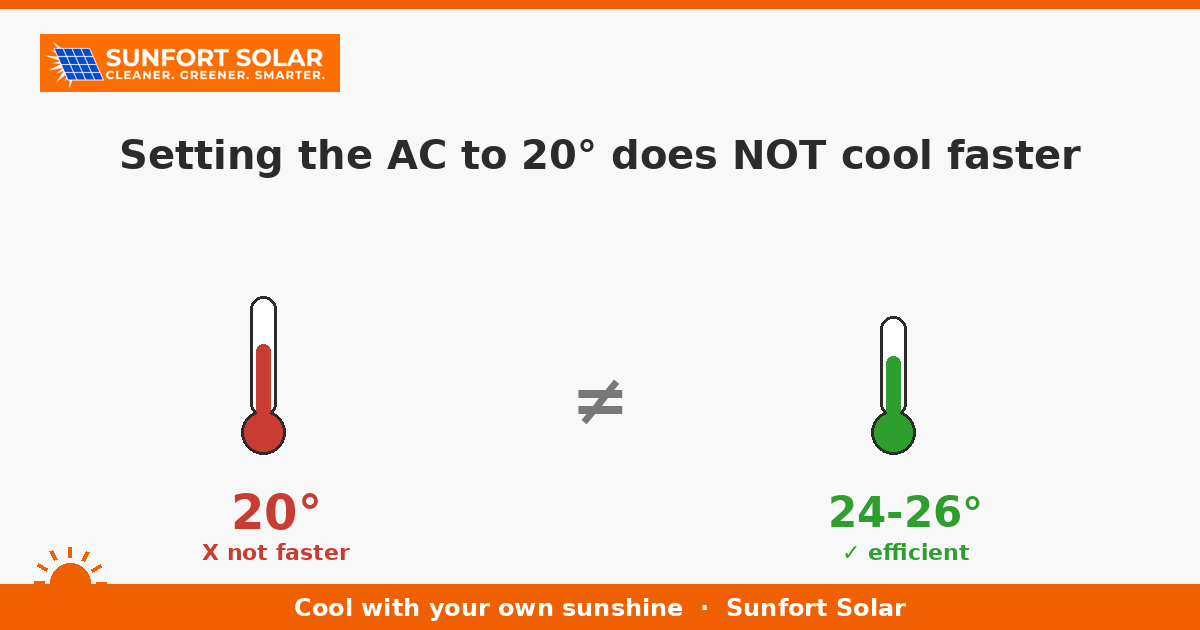
When the heat arrives and the house feels like an oven, many people do the same thing: switch on the air conditioning and turn the thermostat down to 20°, thinking it will cool down much sooner. It seems logical… but that’s not how it works. The unit doesn’t blow colder air just because you set a lower temperature: the only thing that changes is how long it runs and how much it consumes while trying to reach that target.
The thermostat is not an accelerator
An air conditioner isn’t like a tap that gives more cold the further you open it. The unit delivers cold air at a fixed capacity, depending on its power rating, the size of the room, the insulation, the home’s orientation and the outdoor temperature.
If the living room is at 30° and you set it to 25°, it will run until it gets close to that temperature. If you set it to 20°, it will do exactly the same… but for longer and working harder. You don’t reach 25° any sooner; you just force the unit to keep running once a comfortable temperature has already been reached.
Inverter or not, the setpoint is still a target
Modern inverter units modulate the compressor to match demand, but the principle is the same: the temperature you set is the point where it stops, not the speed at which it cools. A setpoint that’s too low makes the compressor run more hours, pushes up the electricity bill and causes more wear on the unit.
The efficient temperature: between 24 and 26°
Technicians recommend a sensible temperature, usually between 24 and 26°. With a fan to help, blinds down and doors closed, that’s more than enough to be comfortable. Each extra degree you drop can mean around 7% more consumption.
Tips to cool better while spending less
- Switch the AC on before the house overheats: if the walls, furniture and floor have soaked up a lot of heat, the unit will take much longer to restore comfort.
- Close the room properly and keep direct sunlight out (blinds, awnings).
- Ceiling or standing fans: they improve the feeling of coolness and let you raise the thermostat by 1-2°.
- Filter maintenance: clean filters cool better and use less energy.
- Stable temperature: steady is better than abrupt starts and stops.
The smart twist: cool down with your own sunshine ☀️
Here’s the best news: air-conditioning demand coincides with the sunniest hours. If you have a photovoltaic self-consumption system, you cool your home with energy you produce yourself —almost for free— precisely when you generate the most. It’s the perfect match for summer on the Costa Brava.
And you can fine-tune it even further:
- Smart thermostats and climate control (smart home): schedule times, zones and the optimal temperature without giving it a thought.
- Aerothermal systems (heat pumps): for those who want heating and cooling plus hot water at maximum efficiency, also powered by the sun.
Conclusion
Setting the AC to 20° is not a smart way to cool the house faster: it only spikes consumption and wear. The goal isn’t to force the unit, but to keep the house cool in a stable way —and, ideally, with your own sunshine.
At Sunfort Solar we help you combine photovoltaics, efficient climate control and smart home so you can enjoy a cool summer while paying the minimum. Get in touch and we’ll prepare a tailored proposal.